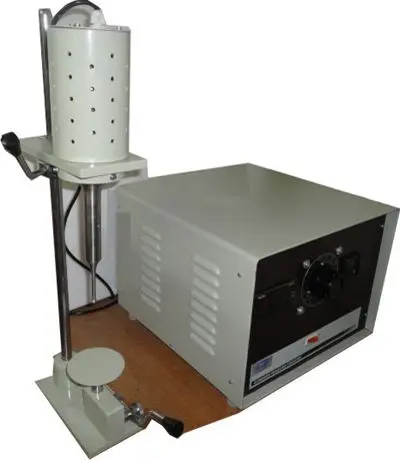
Key Features
- High Intensity: Direct probe energy for rapid processing.
- Digital Control: Programmable timer, pulse mode, and amplitude.
- Lab & Industrial: Models from 500W to 1500W available.
Technical Specifications
| Power Output | 120W, 250W, 500W, 750W, 1000W, 1500W |
|---|---|
| Frequency | 20 kHz / 28 kHz (High Amplitude) |
| Probe Material | Titanium Alloy (Autoclavable) |
| Processing Volume | 0.5ml to 1000ml+ (Depending on model) |
| Control Modes | Touch Screen, Pulse Mode, Timer, Temp Sensor |
| Enclosure | Sound Proof Box (Optional but Recommended) |
Ultrasonic Probe Sonicator & Homogenizer
LeelaSonic manufactures high-performance Ultrasonic Probe Sonicators (also known as Ultrasonic Homogenizers or Cell Disruptors) for laboratory research, pharmaceutical, and biotechnology applications in India.
Unlike ultrasonic baths that distribute energy over a large volume, our probe sonicator focuses high-intensity ultrasonic waves directly into the sample via a titanium tip. This generates intense cavitation shear forces, making it perfect for cell lysis, DNA shearing, nanoparticle dispersion, and creating nano-emulsions.
As a high-intensity lab sonicator and ultrasonic liquid processor, the LeelaSonic probe system gives you precise control over amplitude, pulse mode and processing time for repeatable R&D results.
Get Best PriceApplications
- Biological / Pharma: Cell disruption (lysis), protein extraction, and DNA/RNA shearing.
- Chemical / Material Science: Dispersion of Nanoparticles (Graphene, CNTs, Metal Oxides) and deagglomeration.
- Emulsification: Creating stable nano-emulsions (oil/water) for cosmetics and pharma.
- Degassing: Rapid removal of dissolved gases from liquids.
LeelaSonic India supplies these ultrasonic processors to CSIR labs, IITs, pharmaceutical R&D centers, and biotech companies for advanced research applications. For temperature-controlled indirect sonication or multiple sample tubes, also see our Ultrasonic Sonicator Bath and Ultrasonic Bath with Chiller.
Frequently Asked Questions
A probe sonicator delivers high-intensity energy directly into the sample via a titanium tip, making it ideal for cell disruption and homogenization. A bath sonicator uses indirect energy and is better for cleaning or gentle mixing.
Yes. The high-amplitude ultrasonic waves create intense shear forces capable of deagglomerating and dispersing nanoparticles (CNTs, Graphene) uniformly in a liquid suspension.